

Vegan Oatmeal Cookies
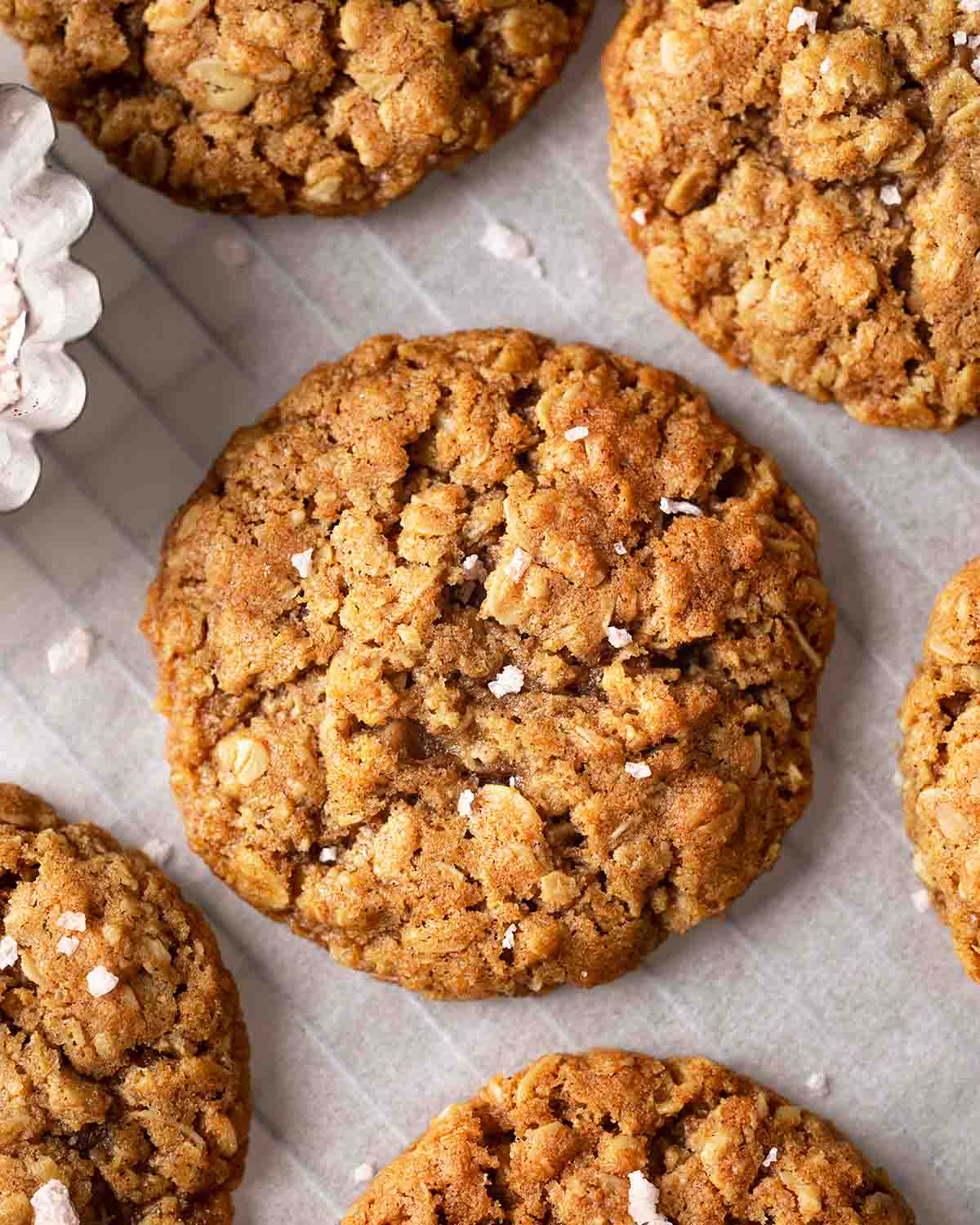
These vegan oatmeal cookies are perfectly soft and chewy, and have warm notes of brown sugar and cinnamon. They’re easy to make and come together in one bowl with common pantry ingredients!
Simple Ingredients You’ll Need
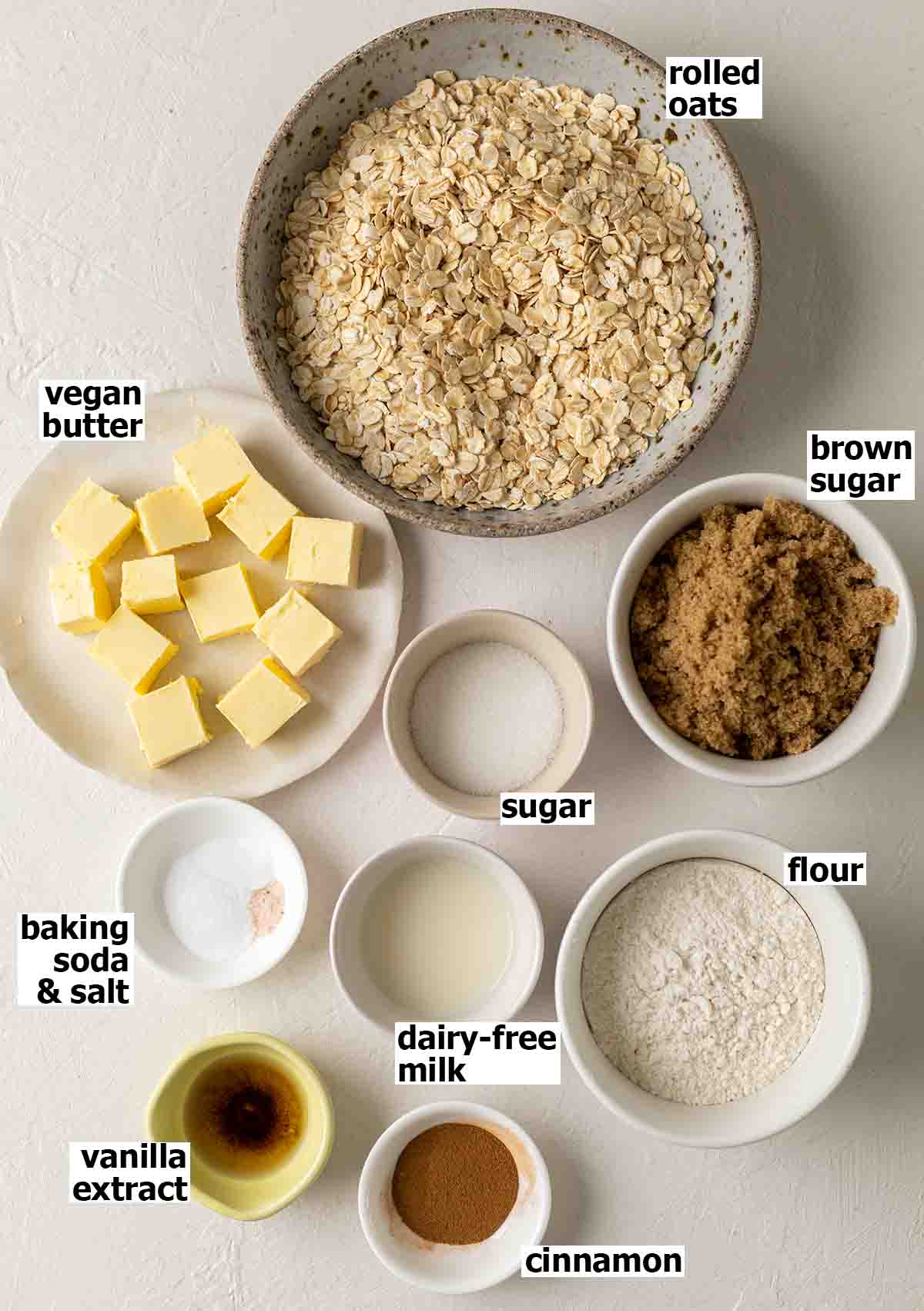
The full list of ingredient quantities and instructions are in the recipe card at the bottom of this post.
Notes About the Ingredients
Brown sugar provides a beautiful molasses flavor and granulated sugar gives a more classic sweetness and encourages the cookies to spread a little more. Alternatively, you can use just brown sugar.
Vegan butter, of the block variety. If you only have spreadable butter, it will still work but your cookies will spread differently and be less rich.
Rolled oats (old-fashioned oats) makes these cookies wonderfully chewy! Quick oats are more absorbent and will change the texture and spread of these cookies
Dairy-free milk such as soy, almond, or coconut. The liquid helps dissolve the sugar and bring the ingredients together. You don’t need a flax egg to make these cookies!
Preparing the Cookie Dough
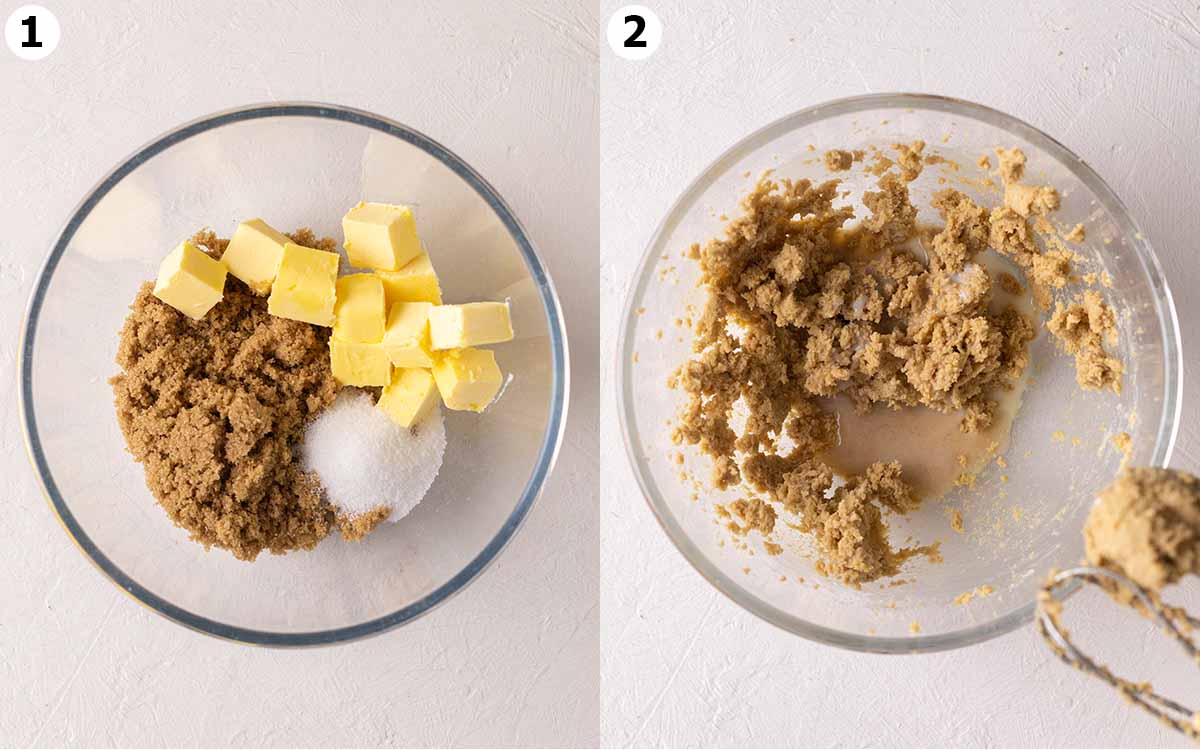
These soft and chewy vegan oatmeal cookies come together in one bowl, just like classic chocolate chip cookies! An electric hand mixer or stand mixer will make the process easier, but a simple wooden spoon and elbow grease will do the trick.
First, beat the sugars and butter in a large mixing bowl until light and fluffy. Then add just 1 tablespoon of milk and the vanilla extract, then beat until combined. All brands of oats absorb liquids differently so you may need the rest of the milk later.
Don’t rush these steps! They help aerate the butter (so your cookies don’t turn into dense bricks) and help dissolve some of the sugar. Once, I didn’t beat the wet ingredients properly and the cookies separated and caramelized on the bottom… still delicious, but not the goal!
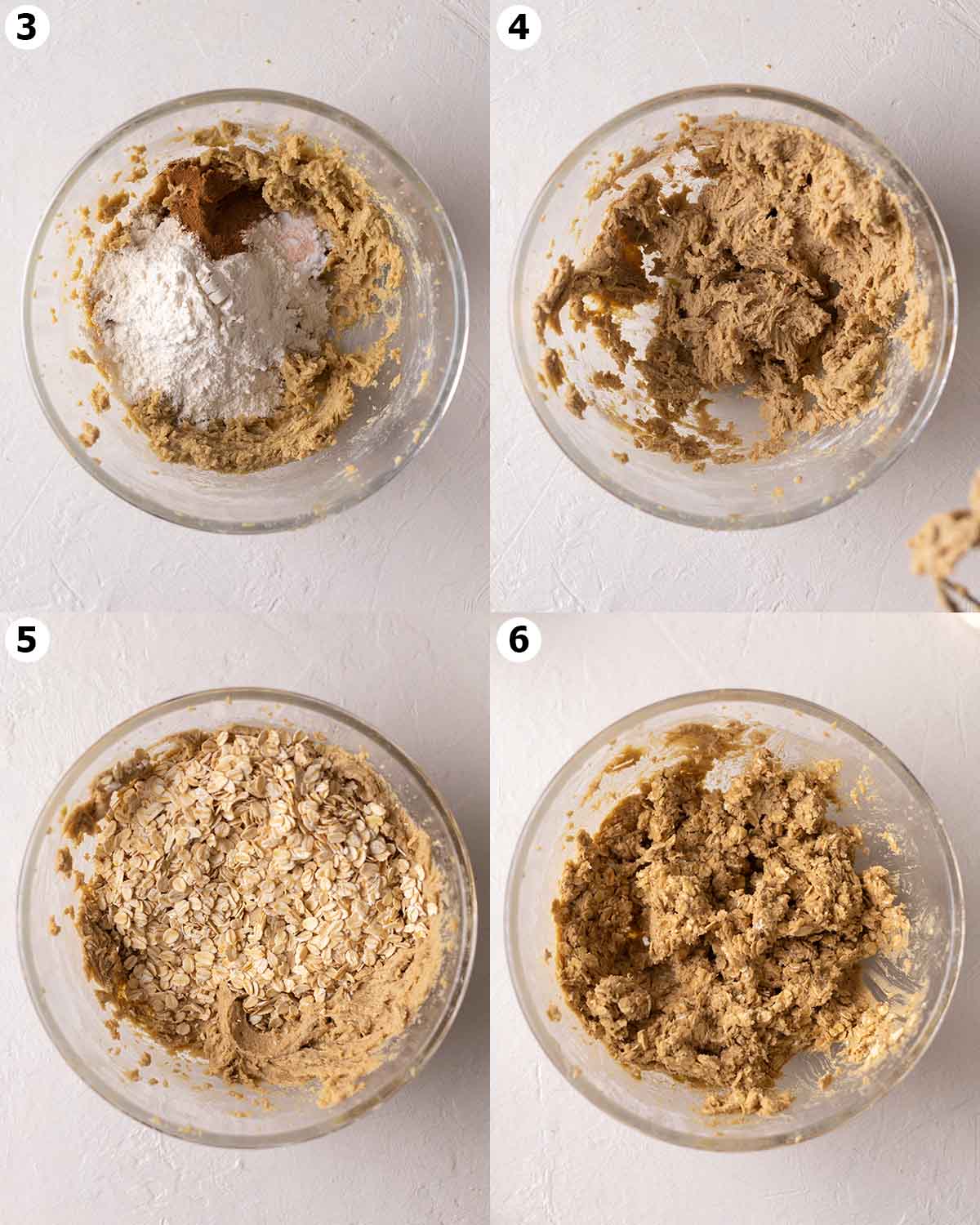
Next, add all your dry ingredients (except your oats), then mix until the dough comes together. By now, you should have a thick paste with no lumps of butter, sugar or flour.
Lastly, add the rolled oats and beat for a few minutes until most of the oats have broken down and the mixture is well combined. You should see only some whole rolled oats in your dough. If the oats haven’t broken down, your cookies will spread too much.
The final cookie dough should be slightly tacky, but not sticky. If your dough has not come together, mix in the rest of the milk. If your dough sticks to your hands, refrigerate it for around 10-20 minutes until it’s a workable consistency.
Top Tips: Shaping Your Ideal Cookie!
To divide and shape these cookies, I prefer using an ice cream scoop (as a standard measure) or clean, damp hands.
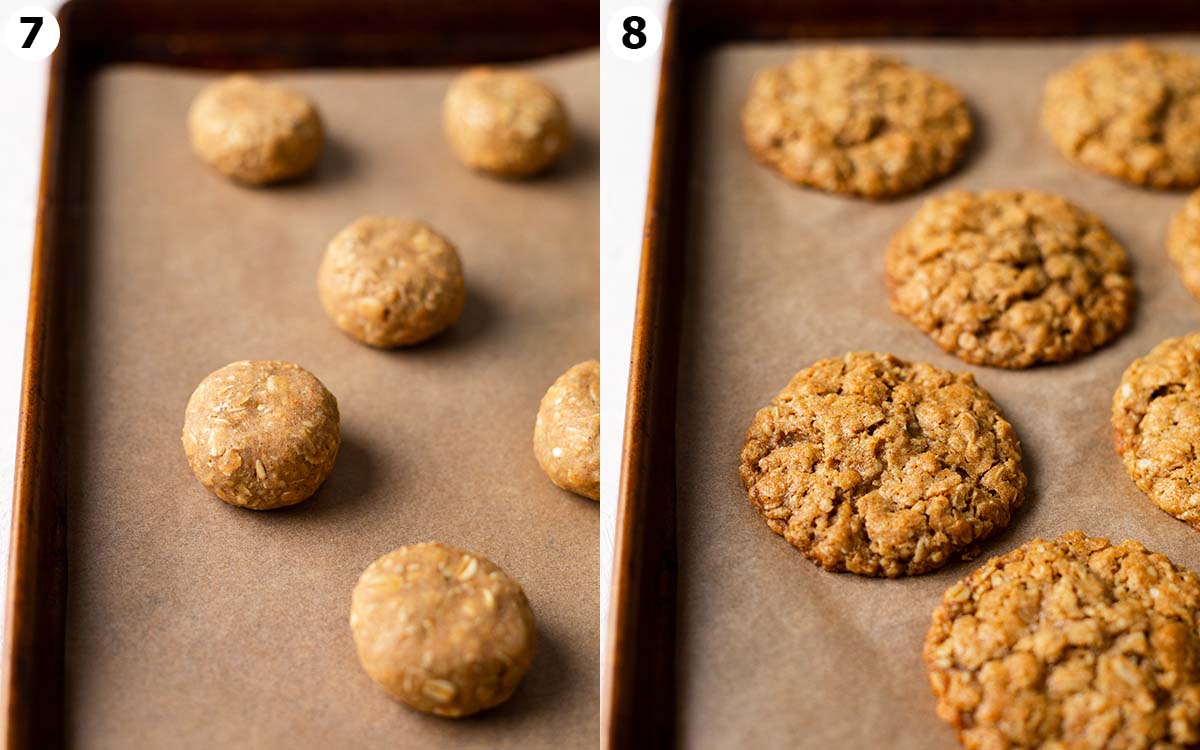
For thick and chewy cookies, keep the cookie dough as balls on the cookie sheets and bake them for 10-12 minutes.
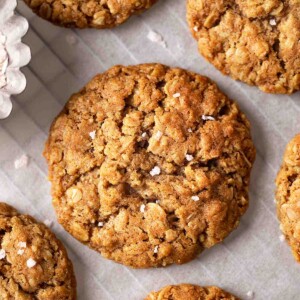
To get a balanced classic texture, slightly flatten your dough balls (as shown below) and bake for around 12 minutes.
If you prefer thin and crispy cookies, flatten your cookie dough balls into flat discs (more than pictured) and bake them for around 14-15 minutes.
Optional Add-Ins
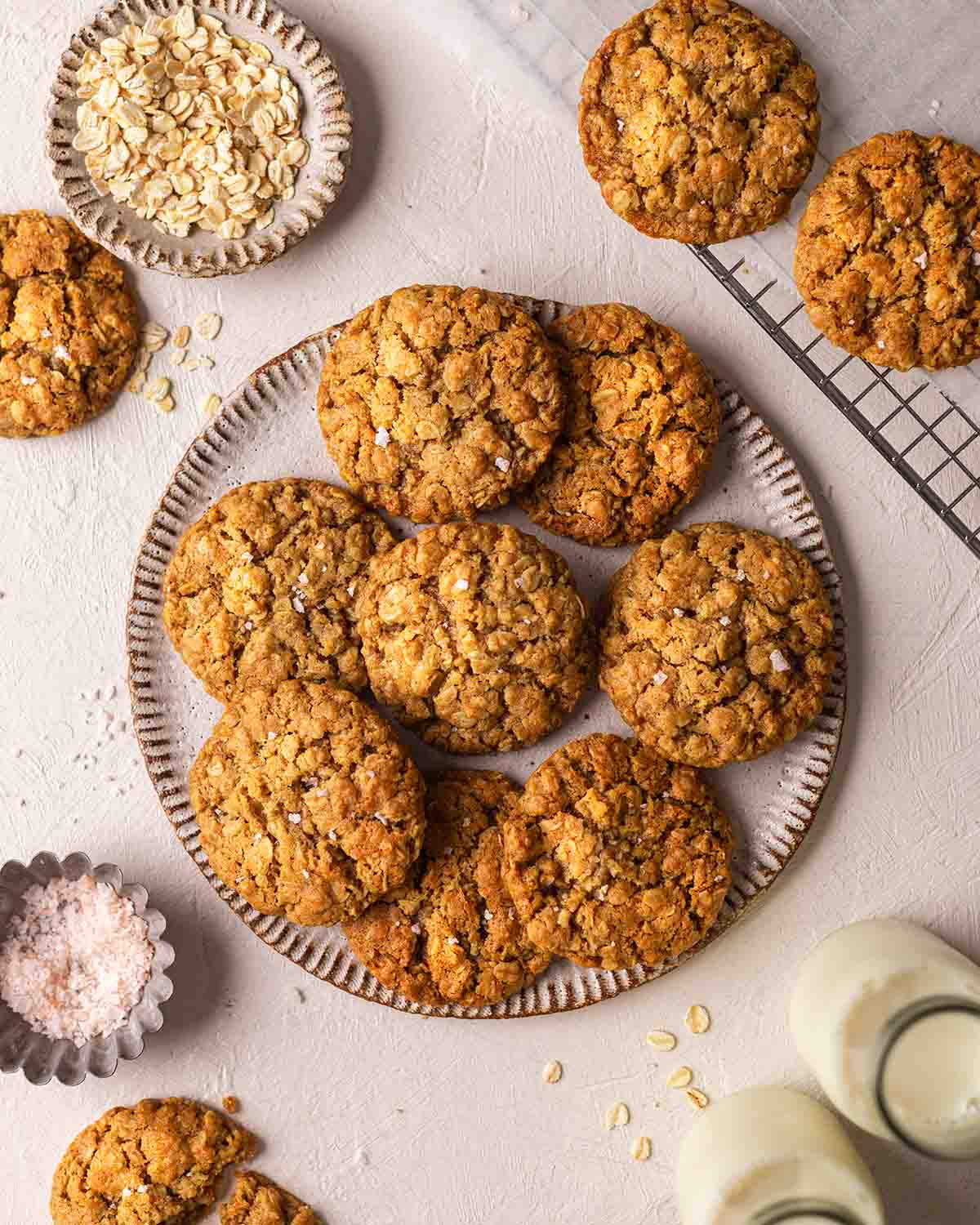
This cookie recipe is wonderful as is! However, here are some delicious ingredients you can mix into your dough:
- vegan chocolate chips (either dark, milk or white)
- raisins (or check out my oatmeal raisin cookies)
- dried cranberries
- finely shredded (desiccated) coconut or follow my vegan Anzac biscuit recipe
I recommend adding any extras at the same time or after the oats have been mixed in. Other ingredients will make the dough drier, so you may need to add a little more milk to bring the ingredients together. Also, your cookies will spread a little less!
Ingredient Substitutions
My team and I have tested these cookies with King Arthur’s measure for measure flour and they work well! I also tried a few generic gluten-free flour blends, which worked well with slightly varying results. If making this recipe gluten-free, make sure you use certified gluten-free rolled oats.
The gluten-free cookie dough is much tackier than the original, so I suggest adding an extra 1-2 tablespoons of flour and adding the milk sparingly. Your final cookie dough should still be soft and slightly tacky! Even though the dough is stickier, please ensure you don’t overbake the cookies.
I haven’t tested this recipe using sugar alternatives like coconut sugar or erythritol so I can’t vouch for results. From experience, sugar alternatives don’t caramelize in the same way as granulated sugar, so your cookies may spread less and be paler in color. Just flatten the dough balls more before baking!
I don’t recommend using a liquid sweetener such as maple syrup, as it’ll be too runny for this recipe.
Yes, but your cookies will spread differently and have a different flavor profile. I recommend adding extra salt for flavor and, since coconut oil doesn’t contain any water in it, add an extra dash of milk to the dough.
More Vegan Cookie Recipes


Follow Rainbow Nourishments on Instagram, Facebook, TikTok and Pinterest, and subscribe via email to receive all of our latest recipes!
Vegan Oatmeal Cookies
Ingredients
- ½ cup (115g) vegan butter, room temperature (note 1)
- ¾ cup (150g) packed light brown sugar
- 1 tablespoons (13g) granulated sugar, or more brown sugar
- 1-2 tablespoons (15-30g) dairy-free milk
- 1 teaspoon vanilla extract
- ¾ cup (95g) all-purpose plain flour, spooned and leveled (note 2)
- 1 teaspoon ground cinnamon
- ½ teaspoon baking soda
- ¼ teaspoon salt, if using unsalted butter
- 1 ½ cups (150g) rolled oats, gluten-free, if needed
Instructions
- Preheat the oven to 180°C (350°F). Line 2 large baking trays with parchment paper.
Make cookie dough:
- Add the butter, brown sugar and granulated sugar to a large bowl. Use an electric hand mixer or stand mixer to beat until fluffy and well combined. Add the vanilla extract and just 1 tablespoon of milk. Beat until well combined.
- Add the flour, cinnamon, baking soda and salt, then beat until combined.
- Add the oats and beat until very well combined and most of the oats have broken down. The final dough should be soft and tacky, but not sticky. If your dough is not coming together, add a little more milk and mix again. If your dough sticks to your hands, chill it in the fridge for 10-20 minutes.
- Use a small cookie scoop or tablespoon measure to divide the cookie dough into 14 balls (around 40g each). Arrange the balls on your lined baking sheets, leaving around 2 inches (5 cm) between them, as they will spread.
- Optional: Lightly flatten the cookie dough balls with your fingers to get cookies like the ones pictured. For thicker cookies, leave them as rounded balls or, for thinner cookies, flatten the balls even more.
Bake the vegan oatmeal cookies:
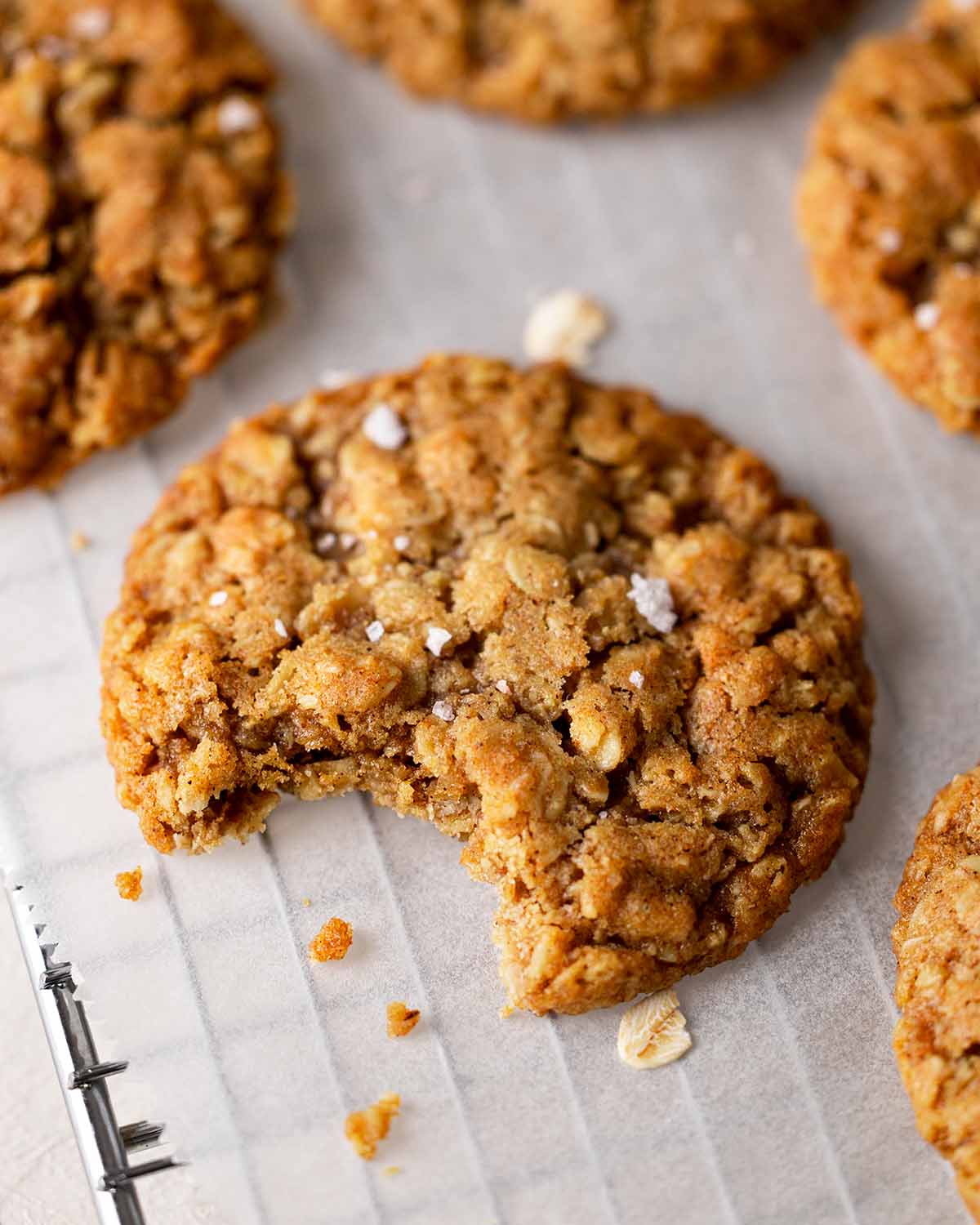
- Bake the cookies for around 11-15 minutes. For soft and chewy cookies, bake them for less time, or for crispy cookies, bake them for longer. The cookies are ready when their edges look set but the centers are still soft. They will continue baking on the trays when you remove them from the oven (note 3). Allow the cookies to cool on the trays on a wire rack.
- Enjoy the cookies warm or at room temperature.
- Store leftover cookies in an airtight container at room temperature for up to 1 week, in the fridge for up to 2 weeks or in the freezer for up to 2 months.
Video
Notes
- These cookies will work with spreadable vegan butter but your cookies will spread differently. Use the butter chilled and add the milk at the end, only if needed. Softened coconut oil will also work but your cookies may spread more. If using, I recommend adding an extra dash of milk for moisture and extra salt for flavor.
- Measuring the flour: Make sure you measure the flour accurately otherwise, your cookies won’t spread as much. If you’re using measuring cups, use the spoon and level method where you fluff up the flour in the bag, use a spoon to add flour to a measuring cup, then level it off with a knife. I don’t recommend using the measuring cup to scoop flour out of your container as this will add too much flour to your dough. For the best results, use the gram measurements.
Gluten-free cookies: These cookies work well with King Arthur’s gluten free measure for measure flour. I’ve also tested these cookies with generic gluten-free all-purpose flours and some brands are less absorbent than regular flour so you may need to add an extra tablespoon of gf flour. Your final cookie dough should still be a little tacky. - This is a very forgiving recipe, though keep in mind that different oat brands absorb liquid at different rates, which can affect how your cookies spread. If your cookies spread more than you’d like, you can gently nudge them back into shape with a larger cookie cutter, glass cup or a knife. For flatter cookies, gently press them down with the back of a spoon while they’re still warm.
This post may contain affiliate links. As an Amazon Associate, I may earn a small commission from qualifying purchases at no additional cost to you.

Will cooked oats work
No, they won’t unfortunately.
This reminds me of oatmeal cookies I used to get at my school cafeteria (and they were the best!). Very good, and it works well with gluten free flour (the one recommended). Will do them again.
Hi Catherine, I’m so glad you enjoyed these cookies and the gluten-free version too! Nostalgic bakes are truly the best :). Thanks so much for your feedback ❤️
These were amazing!! I’m making them for my second time in a week right now actually!
Hi Kaja, that makes me so happy to hear!! So glad the recipe is a keeper for you too. Thanks for letting me know 🥰
I made these cookies for brunch with my in-laws. Loved them. The ouside is slighty crispy and the inside chewy and soft. They are the perfect sweet treet for brunch! Thank you.
Hi Nina, I’m so glad that you loved these cookies! Your description of them makes me want to bake another batch soon 😍. Thanks so much for your feedback!
I made these for my non vegan family and they were absolutely delicious. I used almond milk, a little more vanilla and dark brown sugar because that’s all the store had.
I will be making them next year for Christmas gifts. Thank you so much for sharing
This is wonderful to hear!! And I’m so glad the recipe will be a keeper for you. Thanks so much for your feedback!
Heyyy my cookies didn’t spread. I followed the recipe exactly. What can I do next time ? Add more milk?
Hi Rue! I’m sorry your cookies didn’t spread. Did you happen to measure the flour and oats using measuring cups? If they’re packed in too tightly, it can throw off the balance of the dough and stop the cookies from spreading properly. Unfortunately, adding extra milk won’t correct this. Next time, try spooning and levelling your dry ingredients (there’s more detail in Note 3 of the recipe card) or use the gram measurements instead. I hope that helps! 😊
My 20 year old has always loved oatmeal cookies. He has an intolerance to dairy although he still eats dairy products ending up in an upset stomach. I try to sneak vegan foods in as much as possible. These cookies didn’t disappoint. He loved them and had no idea they were vegan! A win for us both. Thank you for the delicious recipe.
Hi Brenda, I’m thrilled that you and your son enjoyed these cookies! I’m a firm believer that everyone should enjoy delicious baked goods regardless of their allergies or preferences. Thank you so much for your wonderful feedback ❤️
I have made these SO many times now. They are absolutely foolproof and taste delicious. So easy to knock a batch together.
Hi Zoe, aw that’s amazing!! I’m so happy to hear that and thanks for your lovely feedback 🙂
I just made those.
OMG so delicious!!! My husband loved them (and he is very picky) he rated 10/10!!
I left them like 5 mins more bc we like them crunchy on the outside and soft on the inside
Perfect !!!!!
Thank you so much for your kind feedback! We’re sooo happy to hear these cookies were a hit, especially with your picky husband! We really appreciate you sharing how you baked them to your liking and glad you found your perfect balance!